Tierra Santa: The 10-Year Project That Became My First Photo Book
I like churros. A lot. But what I like the most is waking up early and going down to buy them. It was on one of those mornings, almost ten years ago, in Galapagar (Madrid) when everything started.
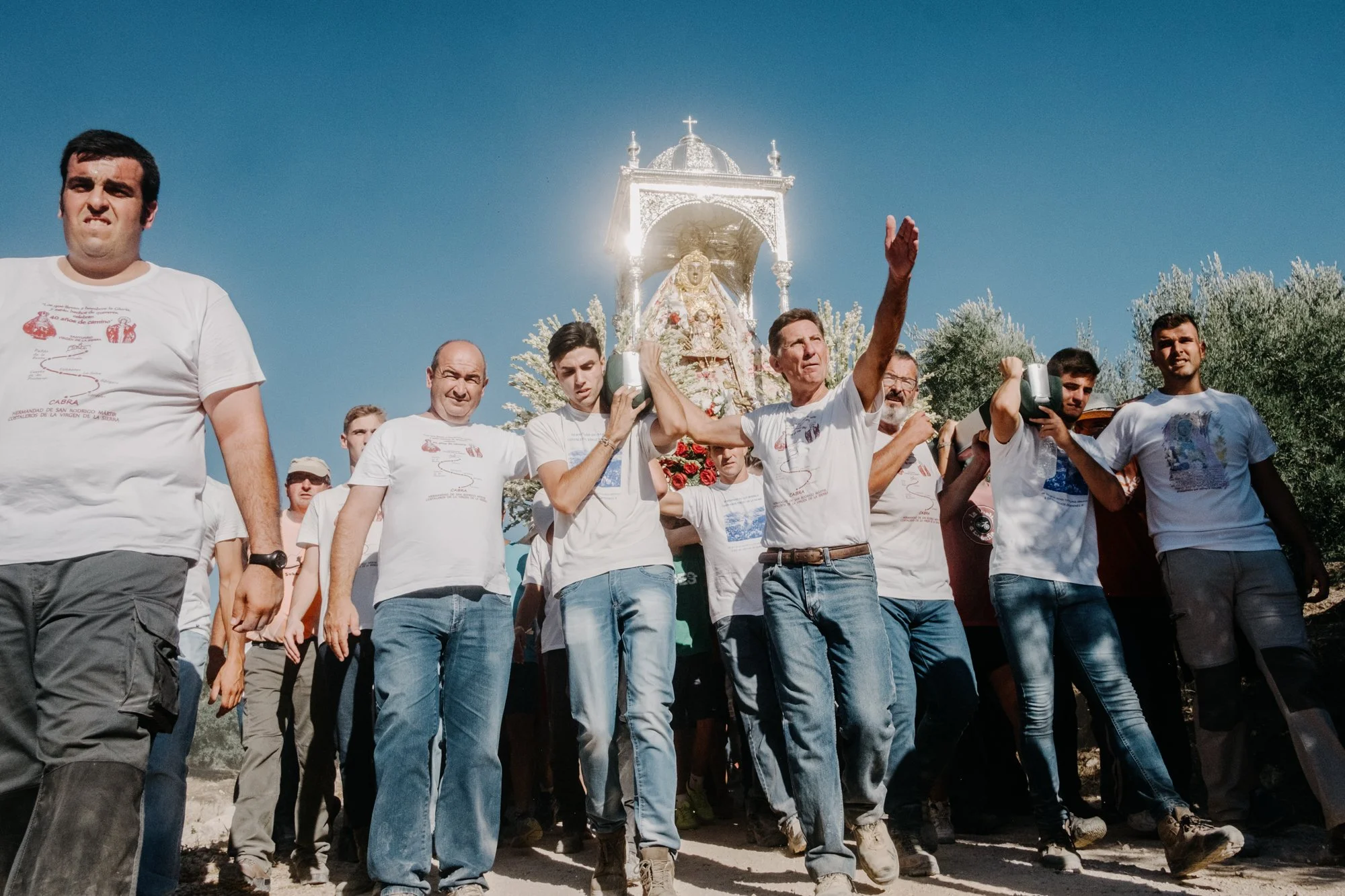
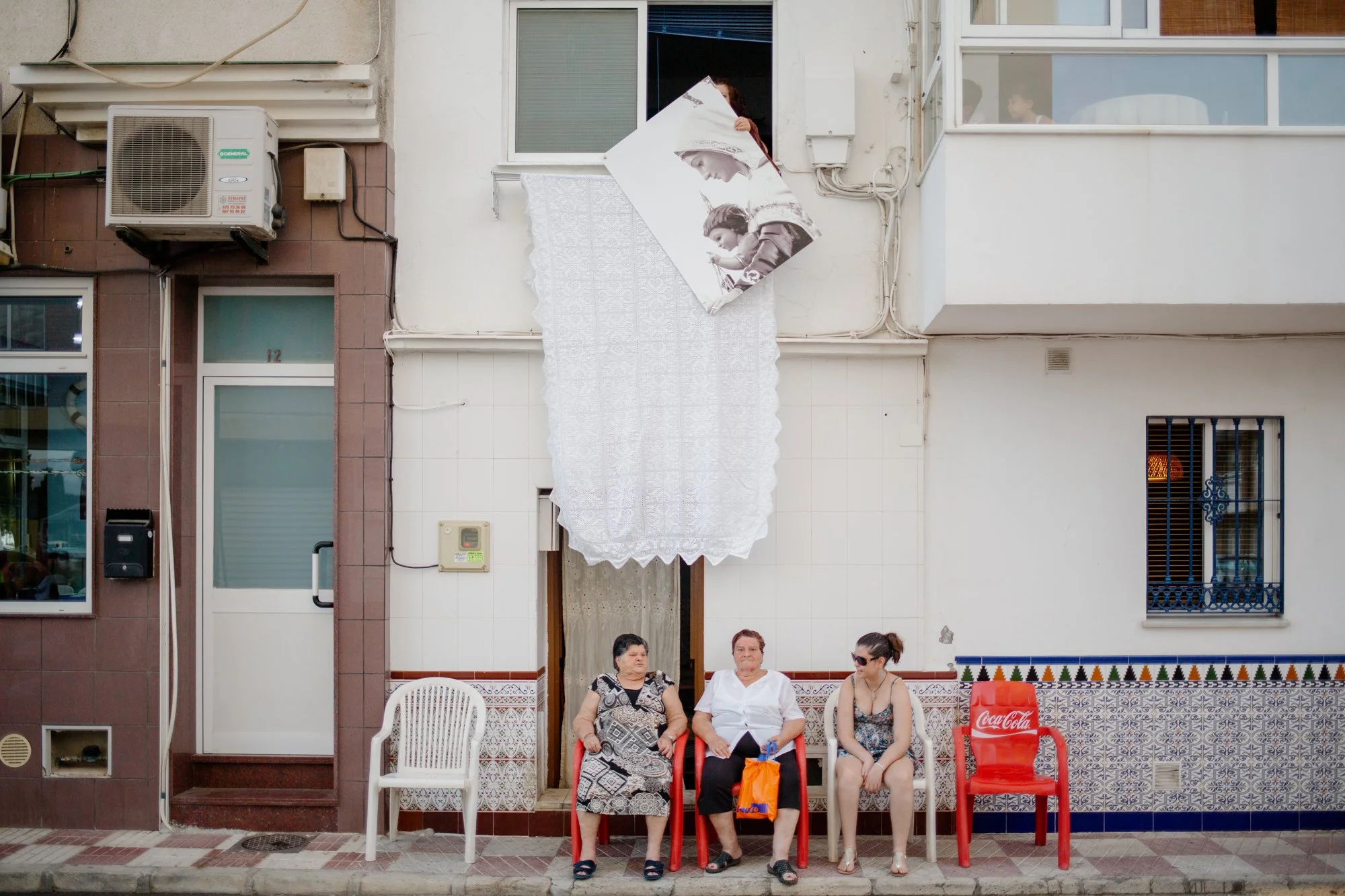
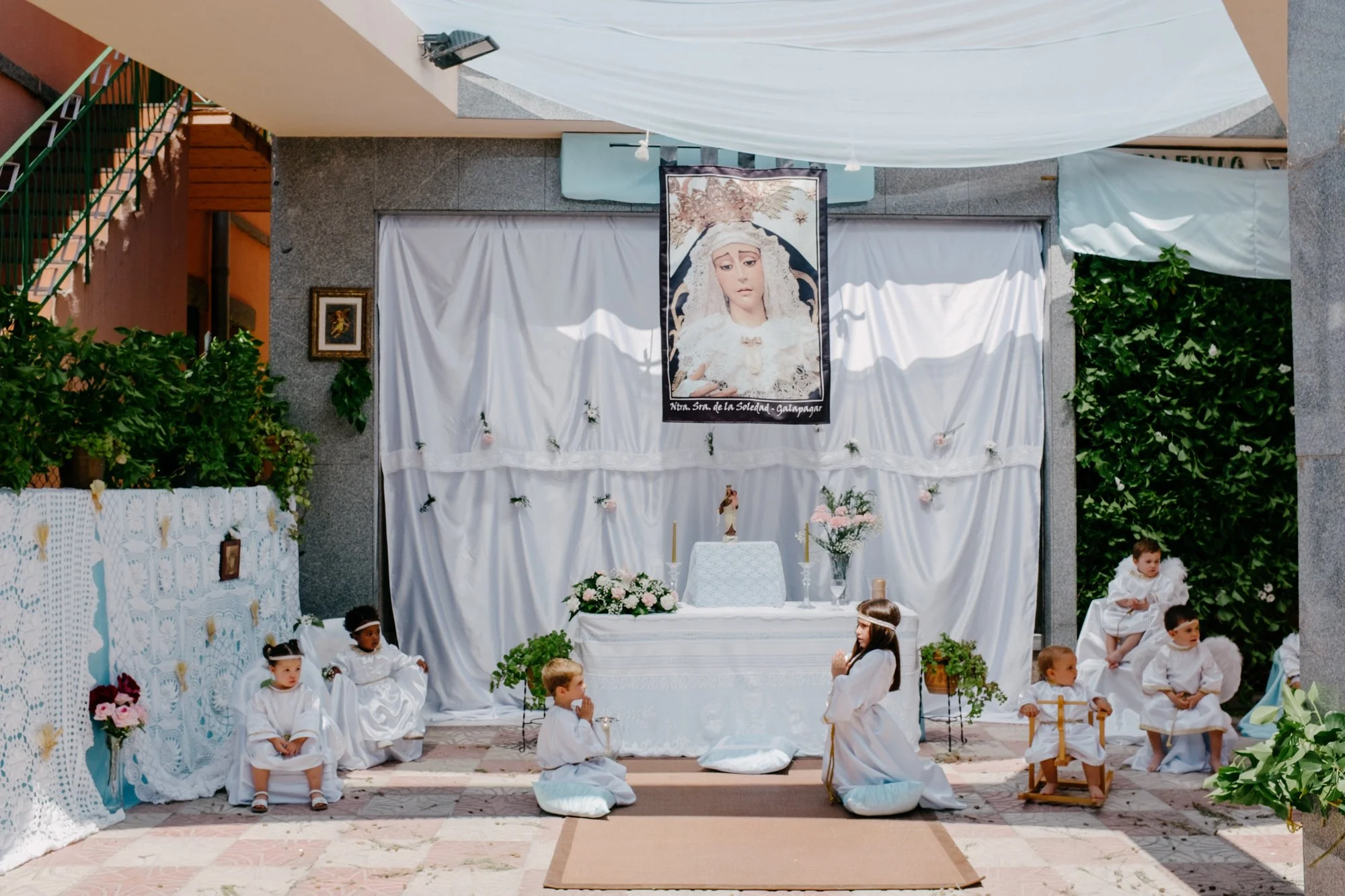
The town was buzzing with activity, unusual at such an early hour. The streets were adorned with festive decorations, the doorways of buildings transformed into colourful shrines, and a festive atmosphere reigned. I later learned that day was the festival of Corpus Christi, one of the most important celebrations of the Christian calendar. The movements of the townspeople seemed choreographed; a street theatre uniting them in the common aim to celebrate a popular event. I was gripped by the urge to document the scene, so I grabbed my camera and spent the whole day taking pictures.


Only a few months earlier I had been in Southeast Asia photographing places filled with colour and life. Yet I felt unable to capture anything specific, only the superficial. Lack of time made it impossible to go deeper, but I was also missing an affective or cultural connection that would bring me closer to those places; something I believe is needed in order to go deeper than the obvious. In my own country, however, it was a completely different story. There, I could connect with people through a language that goes beyond verbal communication. From that morning in Galapagar, documenting my own ‘Tierra,’ my homeland, became my personal mission.
This decision was, of course, directly related to the fact that I had been living away from my country for over ten years by that point. It was a key moment in my life, when I realised that living in Manchester (UK), far from my native Spain, had gone from being a temporary situation to a permanent one. For a while I had had the sensation that my roots were slowly vanishing. My migrant condition served as emotional impetus for a journey of rediscovery of myself and my roots.
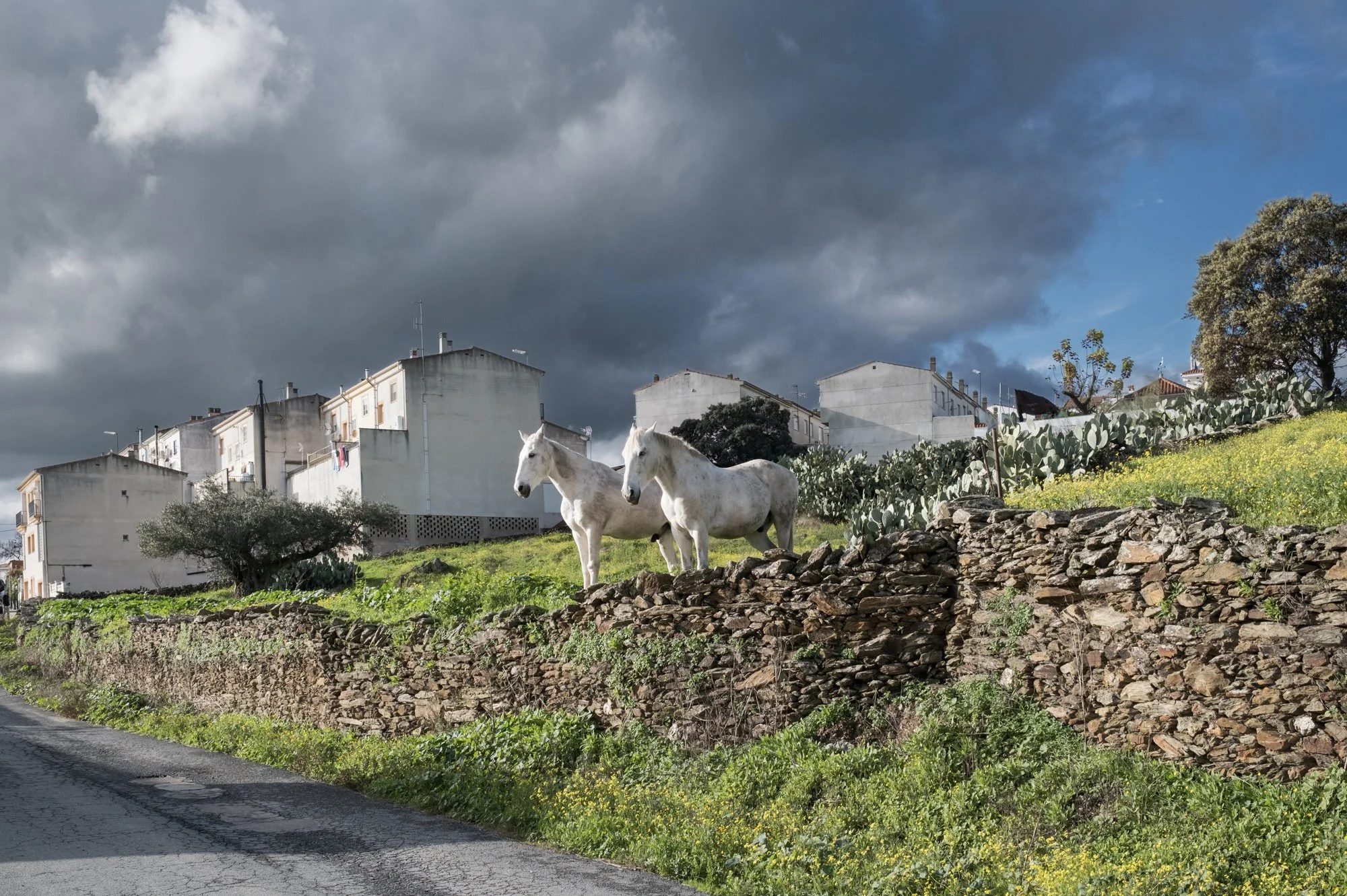
So, armed with my cameras, I started travelling around Spain. In the beginning, my aim was clear; to avoid the most typical places, the big cities, and instead to explore that ‘Empty Spain,’ which was a talking point at the time because of Sergio del Molino’s book of the same name.


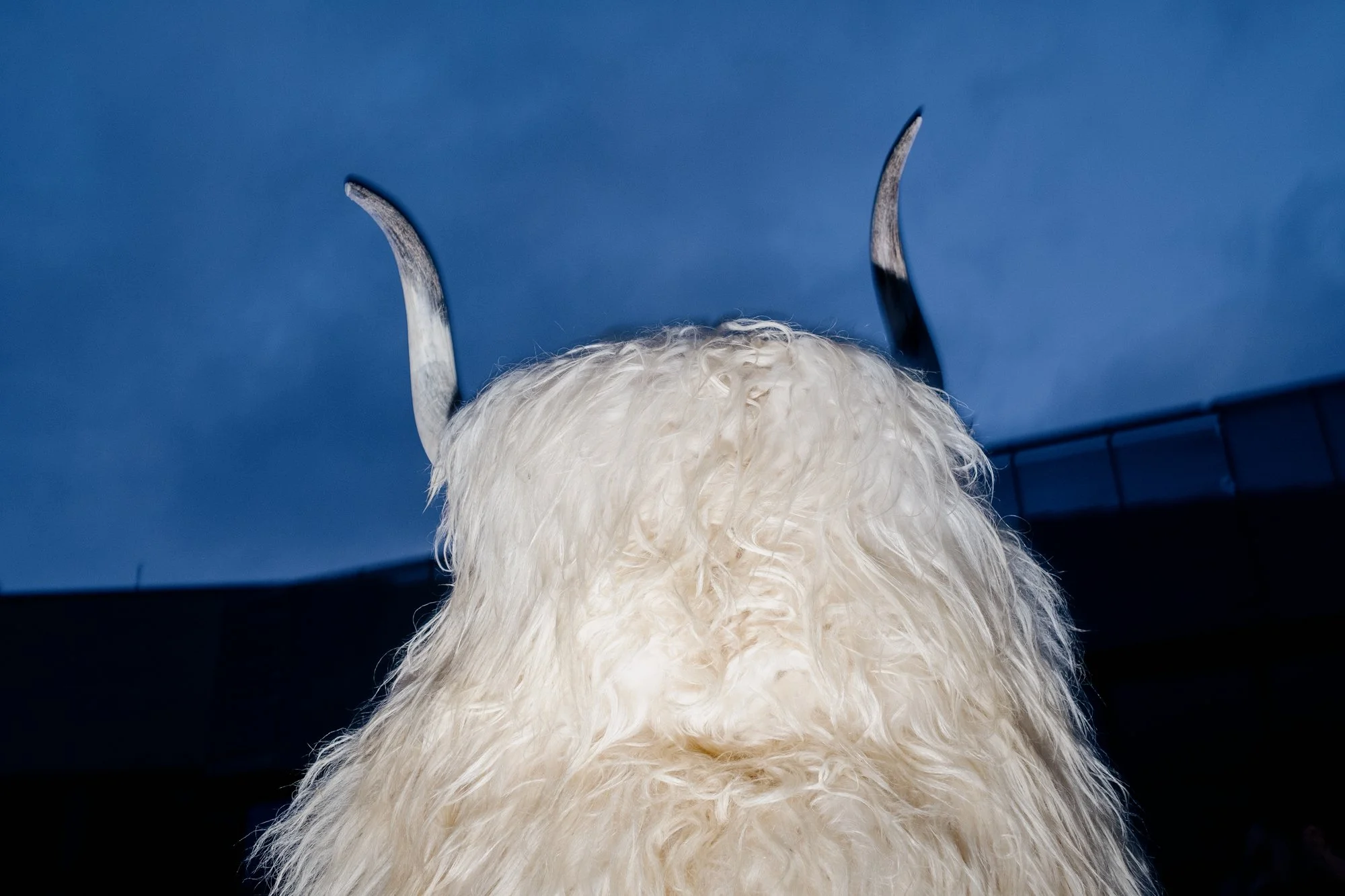
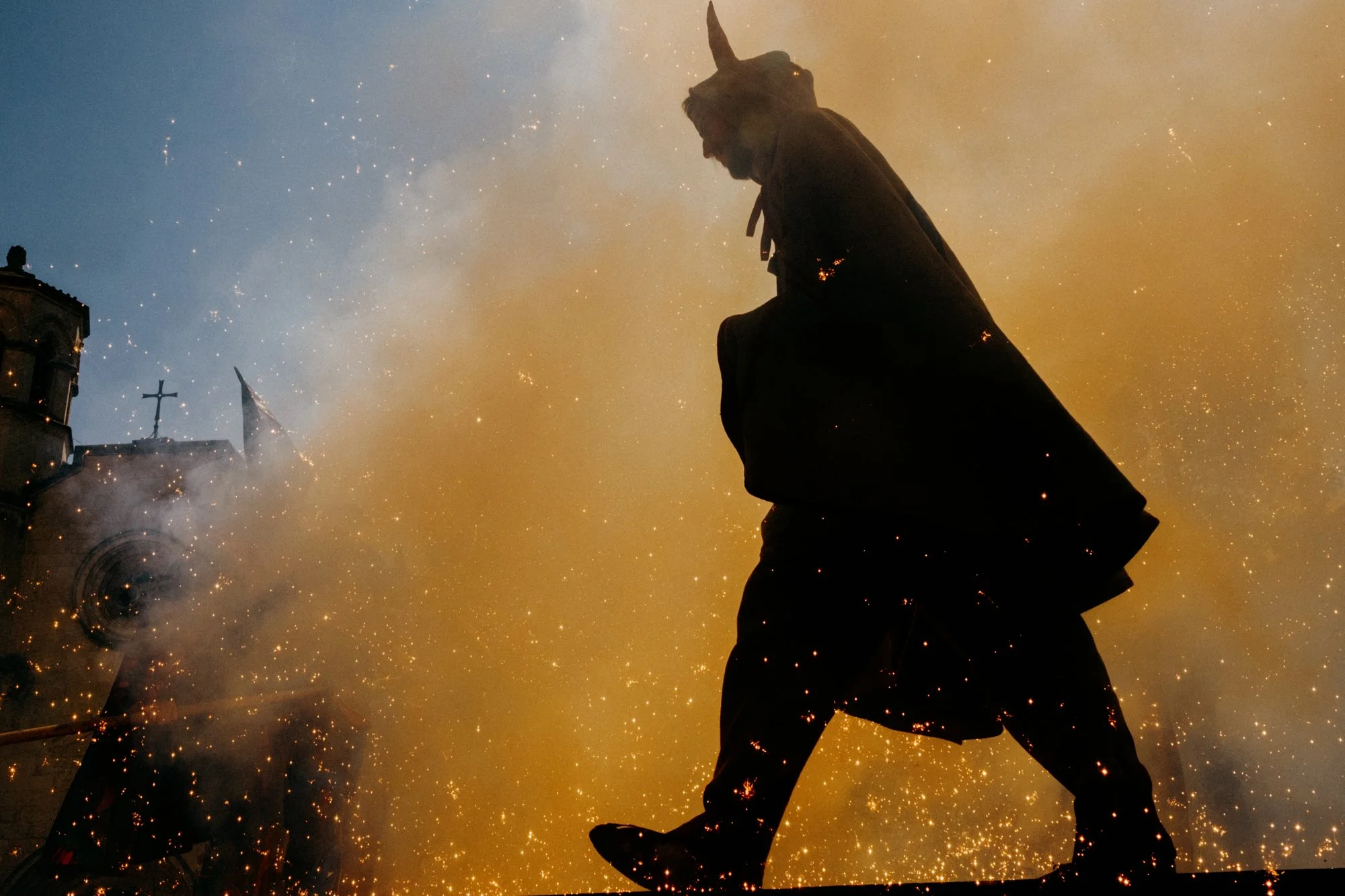
I was interested in small towns and villages; the abandoned rural world. Little by little, and after studying the work of other great photographers like Cristina Garcia-Rodero or Cristobal Hara, I began to develop an interest in fiestas, a phenomenon deeply ingrained in Spanish culture, which would allow me to explore places that would otherwise have been difficult to discover. These fiestas usually happen once a year and are mostly, but not always, of a religious nature. At fiestas, you can see the craziest and most hilarious situations, like at Jarandilla de la Vera (Extremadura), where every 7th December, in celebration of the day of the Immaculate Virgin, people hit each other with enormous brooms, made of branches and twigs, which are set on fire. There are other fiestas, where religious sentiment is expressed in a much more personal and austere manner, such as the Easter festival in Zamora, to mention just one.
It was then that I began to realise how significant and special it was for me to photograph people while they celebrate their culture, their roots and what makes them special. In many cases, these fiestas are not only enjoyed by the locals, but they also attract families and individuals, who may have migrated many years previously to bigger cities and for whom these are the only occasions on which they go back to visit their parents’ or grandparents’ place of birth. At the end of the day, wasn’t that the very same thing that I was doing, by going back to photograph my country?


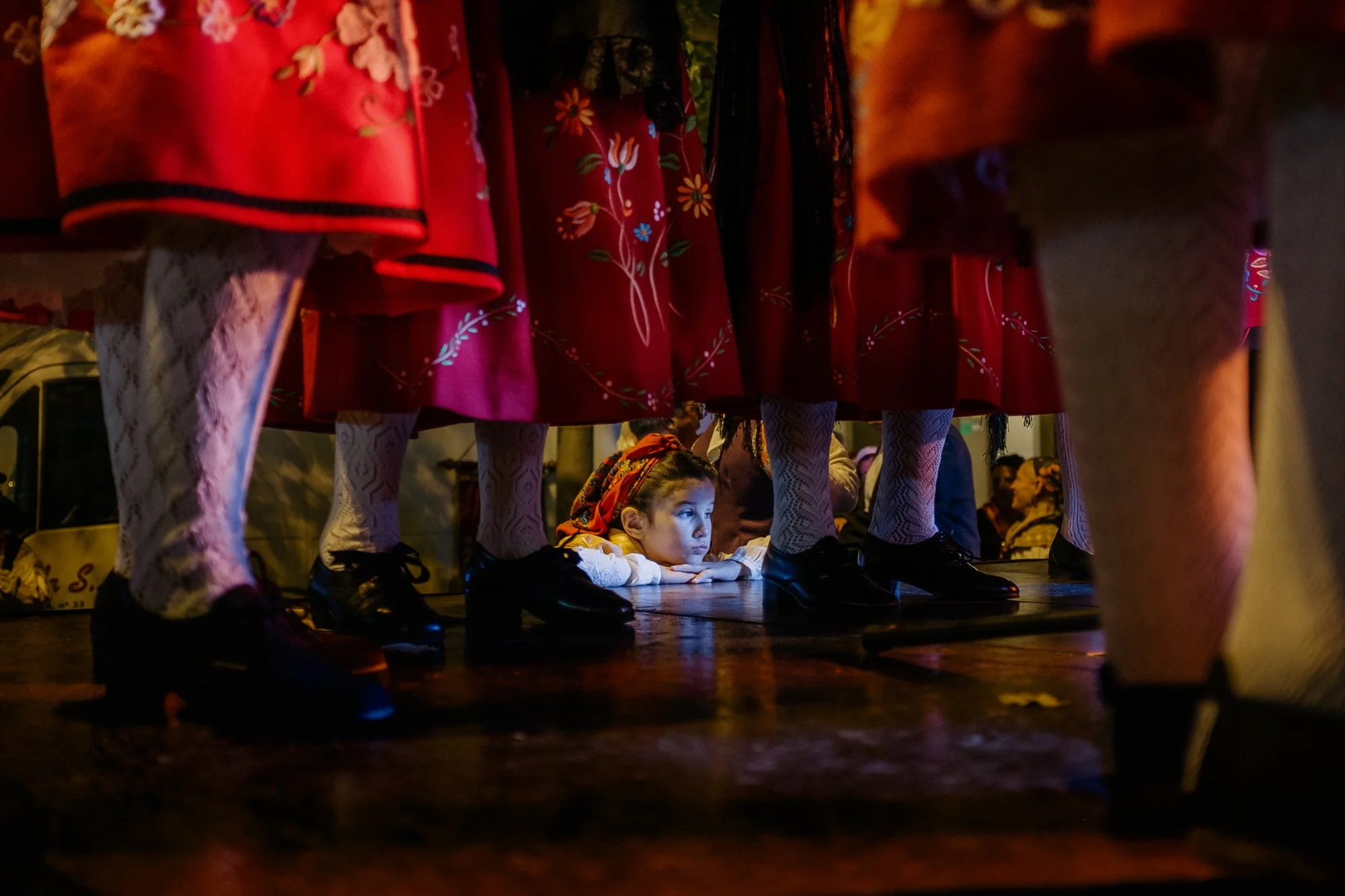
Initially, I took frequent trips across Spain; often fleeting, sometimes lengthier. I would choose my destinations quite randomly and often went to fiestas that drew my attention for their photographic potential. However, I gradually became more selective. I started to go to places where the celebration wasn’t just playful or touristic. I also had it very clear in my mind that I wasn’t particularly concerned by the central focus of the fiesta, but rather by the margins of the celebration. It was there that I found the scenes that interested me most, because they were furthest from the obvious.
For me, photography is not only a tool to capture images but a passport to connect with people and their surroundings. It’s the perfect excuse to establish a conversation, to meet people and explore unknown places. The final image is just a consequence of this act of exploration.
Personally, this is a very important book. It is not only my first publication as a photographer, but it also captures almost ten years of my life, which have left an indelible mark on me and during which I have grown and matured as a person, and a photographer. Each image in this book has a story behind it, and with these photographs and these stories. I want to pay homage to all those who get together to celebrate their roots and culture; to those who have left their homeland either by obligation or of their own accord, and who always carry it in their hearts as they celebrate an act of humanity which remains in the collective memory and shapes the future.
This text was originally written as intro for the ‘Tierra Santa’ book published by Eyeshot.