Photographing North India: Absolute Chaos (In the Best Way)
Back in January 2023, I had the opportunity to travel to a country I had always wanted to photograph. With her vibrant colours and the diversity of people, religions, landscapes and cityscapes, India has huge appeal to photographers, and she certainly didn’t disappoint! I was traveling with fellow photographers, Kristian Leven and Jure Maticic with whom I had already been on photographic adventures before, including our street photography trip to Ethiopia.


The first thing to note is that travelling in India is difficult because it is a massive country and land trips take a long time, so If you have a reduced amount of days (we had 15 days) for the trip then it’s better to plan ahead and leave some room for improvisation. However, this is not easy task as your initial impulse is to visit everywhere! But with photography, I find it’s always better to spend a few days in the same place so you get used to the locations and get to know where is good to go and what time, with light considerations etc. The general plan was to travel across parts of North India starting and finishing in Delhi while visiting other towns along the way like: Varanasi, Lucknow and Amritsar.
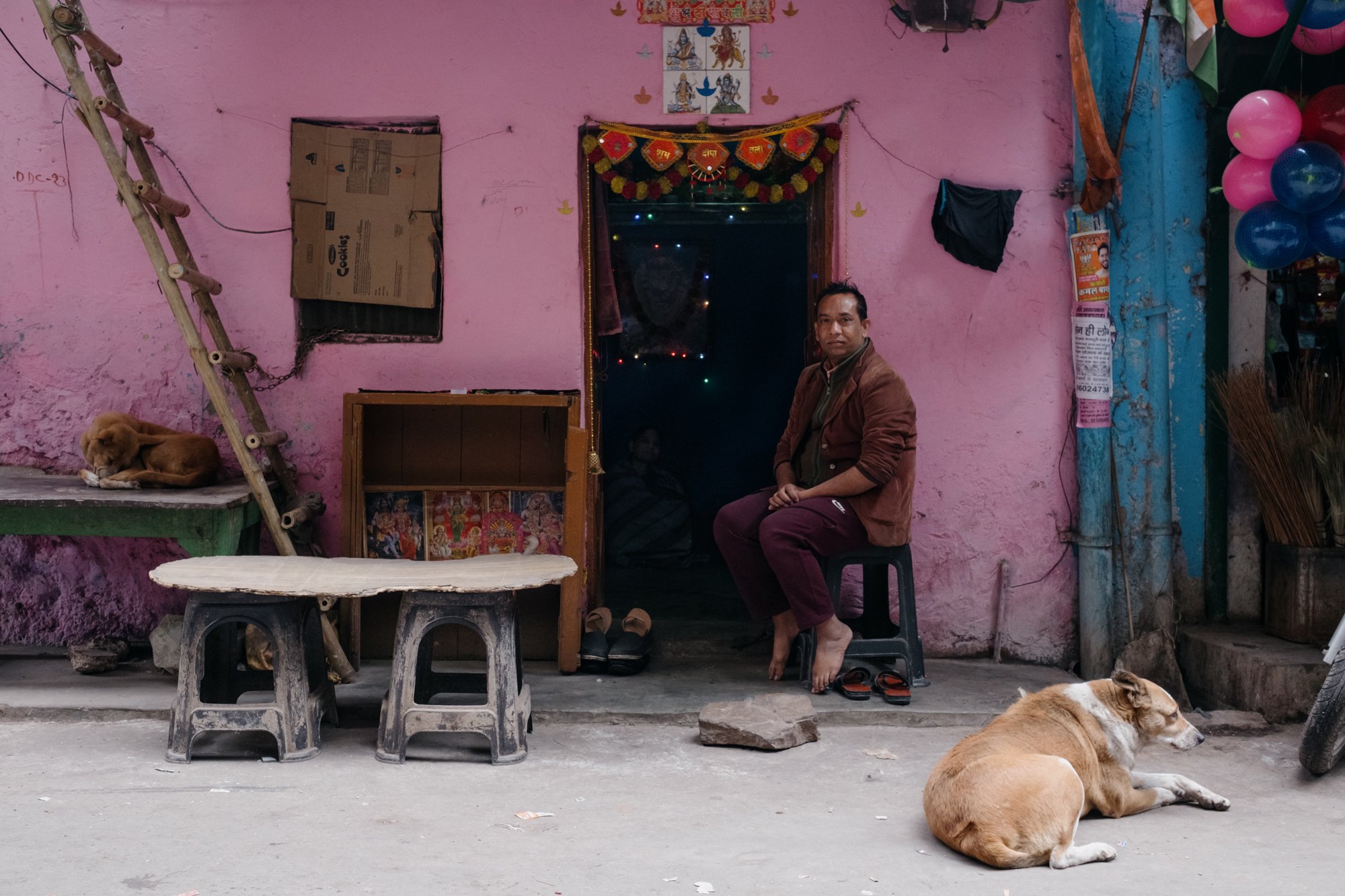
Delhi is what I was expecting; an apparently chaotic ecosystem where humans of all races, religions and social classes, monkeys, tuk-tuks and every other imaginable being co-exist understanding their own set of rules which for a first time visitor can be difficult to compute. It takes a few days to get used to the system and to the attention you get as a foreigner, in particular in certain parts of the Old Delhi. So it takes time to develop and adapt your photography to an environment exploding with so much visual stimuli. Everywhere you look demands your photographic attention. It also hard to avoid the mind-blowing levels of poverty and, of course, to avoid photographing it.


Varanasi and Lucknow — Movement and Scale
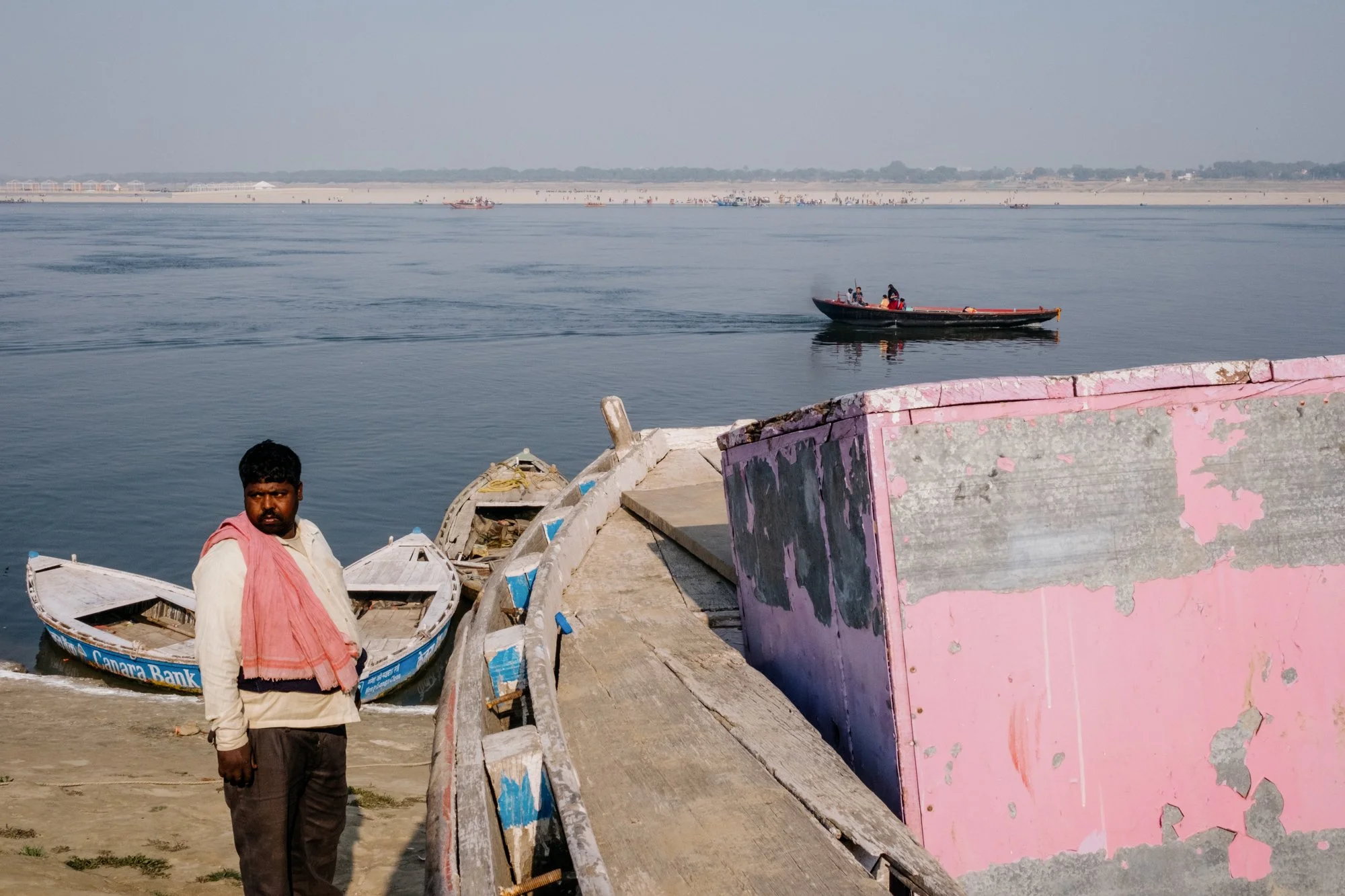
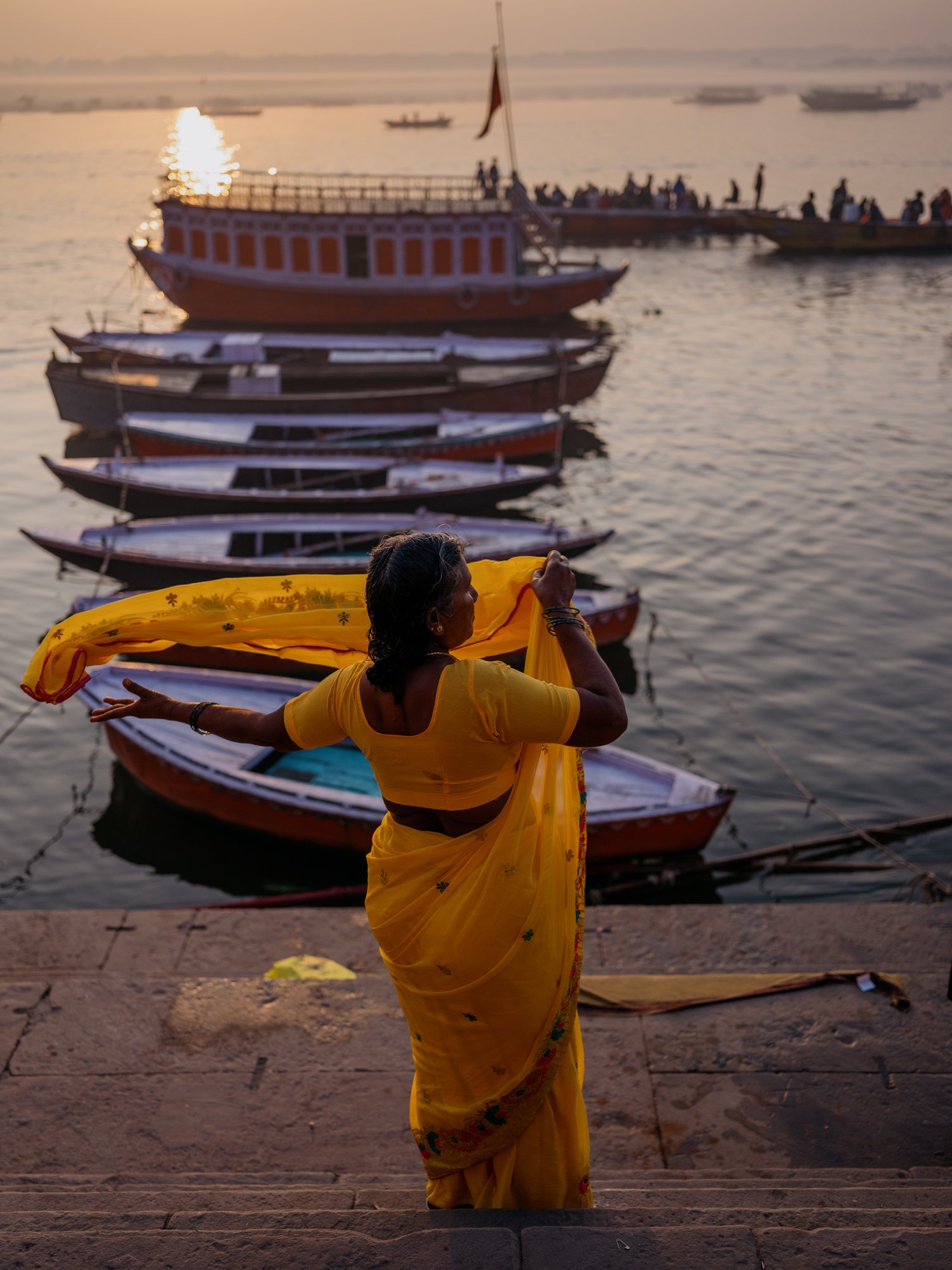
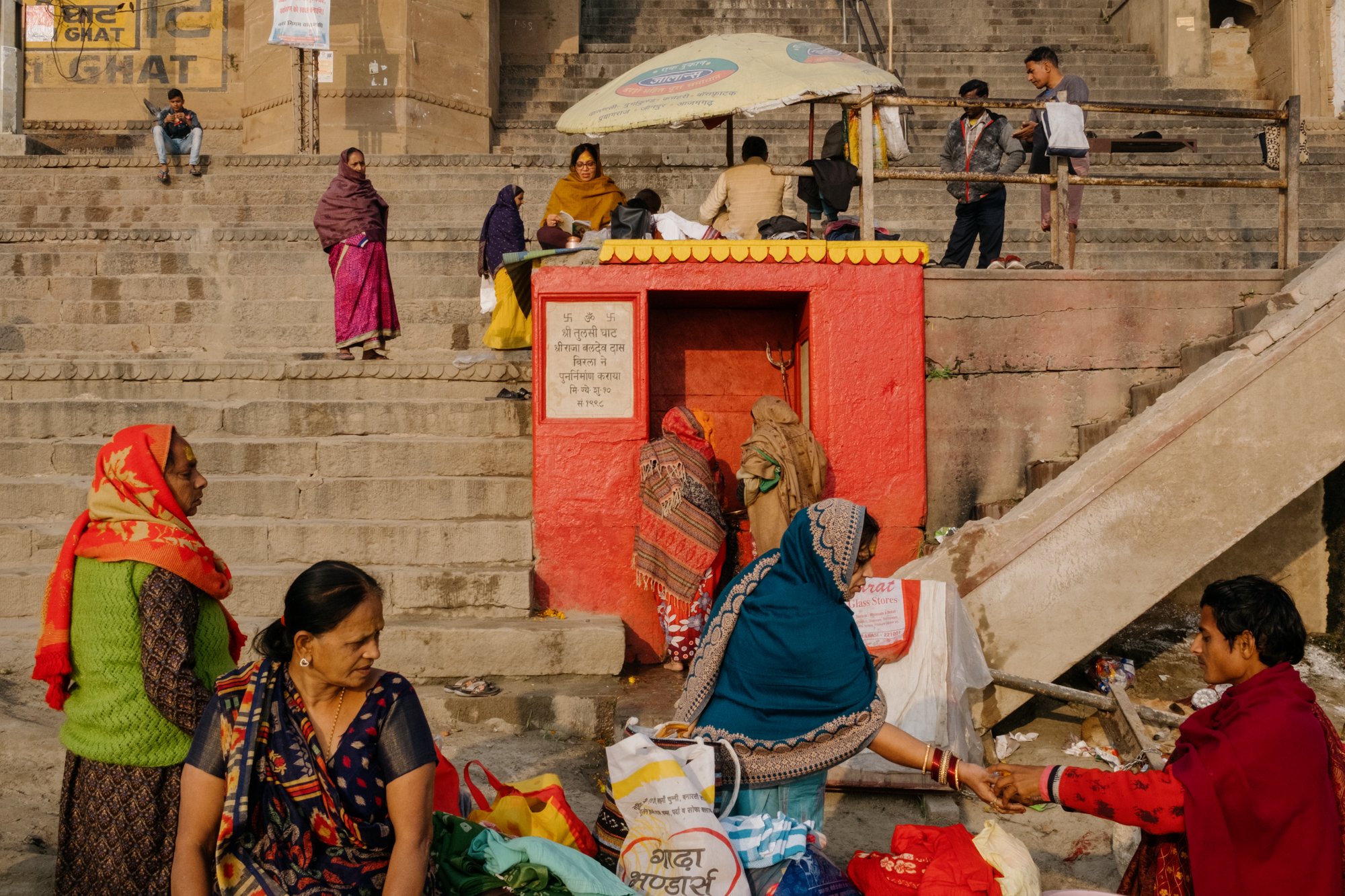
The trip followed onto Varanasi which is the most sacred of towns for Hindus. Varanasi follows the famous Ganges river which is truly the lifeblood of the city, as it is used in so many ways. Being a sacred river, the Ganges is a depositary for the remains of the dead after they have been cremated in the cremation Ghats. This is truly an awe-inspiring sight for a westerner. Along the riverbanks, there are multiple Ghats (docks) which are a hive of activity throughout the day. It is also great to explore the narrow alleys which are always vibrant and full of life.
Our next stop, Lucknow, was a fascinating location. Less famous (at least to a foreigner) than the other cities but still full of interesting areas and people. A big highlight and a must-see was the Bara Imambara, a shrine built by Shia Muslims for the purpose of Azadari. The complex of buildings themselves are amazing but beware that photography is forbidden inside. However, all the area around it is still great and worth a visit.


Amritsar — Celebration and Contrast
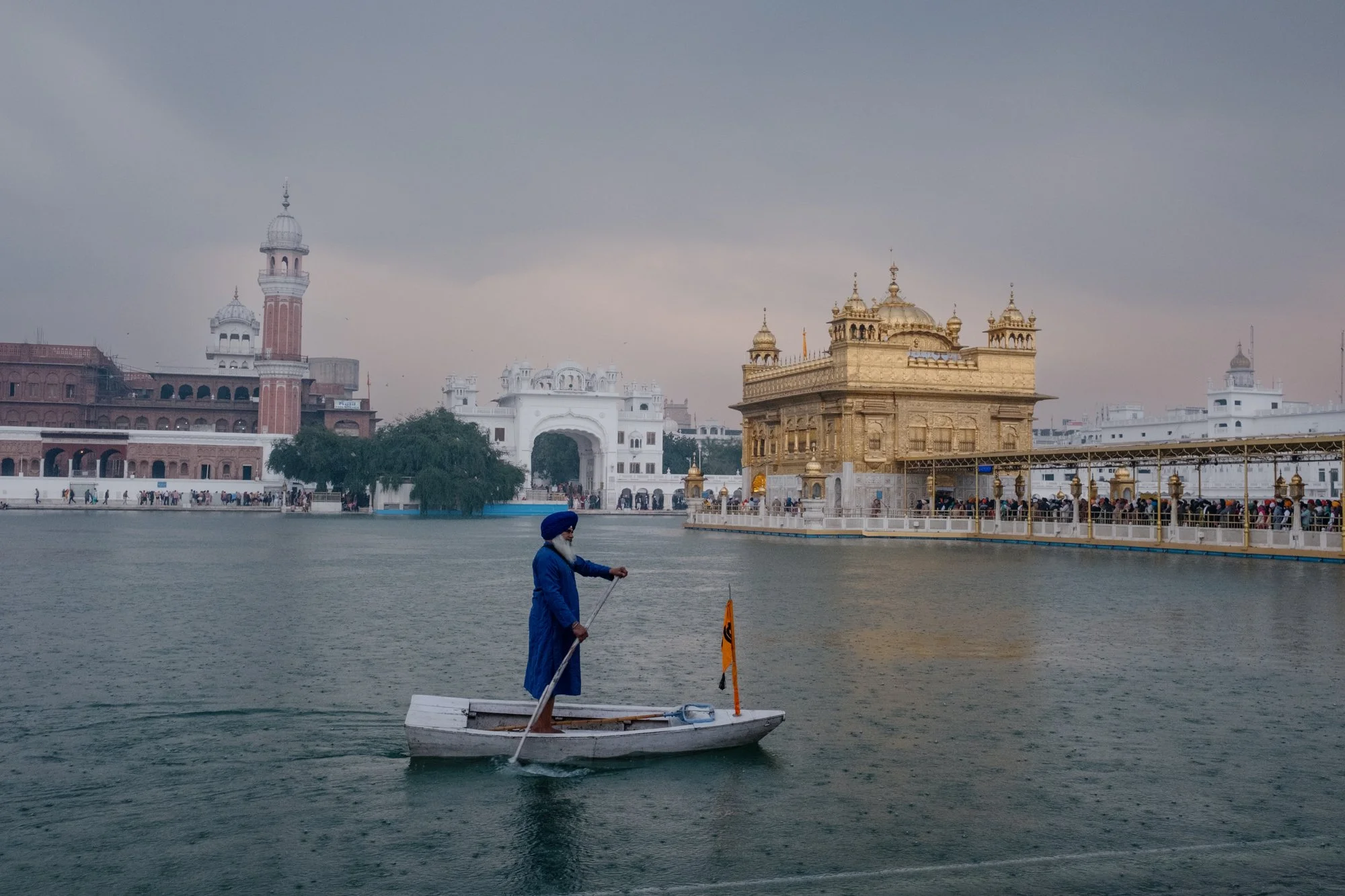
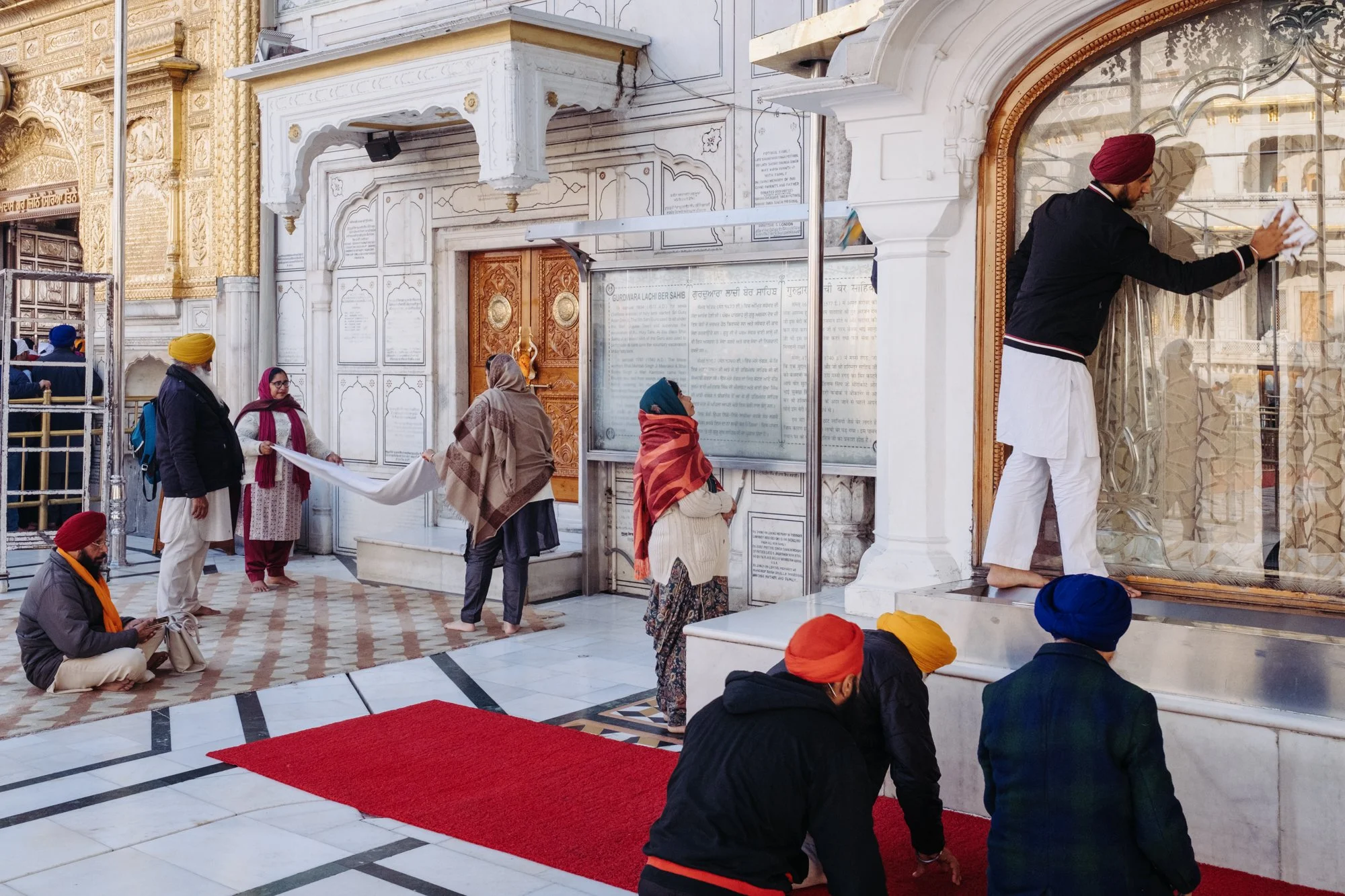
The last stage of our trip, and for me the highlight, was Amritsar; home to holiest gurdwara (religious complex) of the Sikh religion, the Golden Temple. And boy oh boy what an amazing place this is. A beautiful central shrine surrounded by a man-made lake. All around the lake, pilgrims come to walk while listening to the prayers coming from the on-site speakers. A very pleasant place to go, meditate and photograph. At first it might seem like a daunting prospect but once you get used to it, respect the locals and the guidelines of the temple, it’s a wonderful place to be and photograph. The amount of times I went around the lake, more than 20 for sure, it was phenomenal!! Another great location in Amritsar and if you are willing to take a 40 minutes trip is the border with Pakistan, the Wagah border where every evening of the year, there is a ceremony of closing the gate. This is watched by a big crowd of people (at both sides of the border) sitting in a semi-circular stadium while cheering and shouting for their country. This is truly a must-see experience but if you read between the lines, it can also be a bit scary as I’m not one to enjoy effusive demonstrations of nationalism.


See you next time
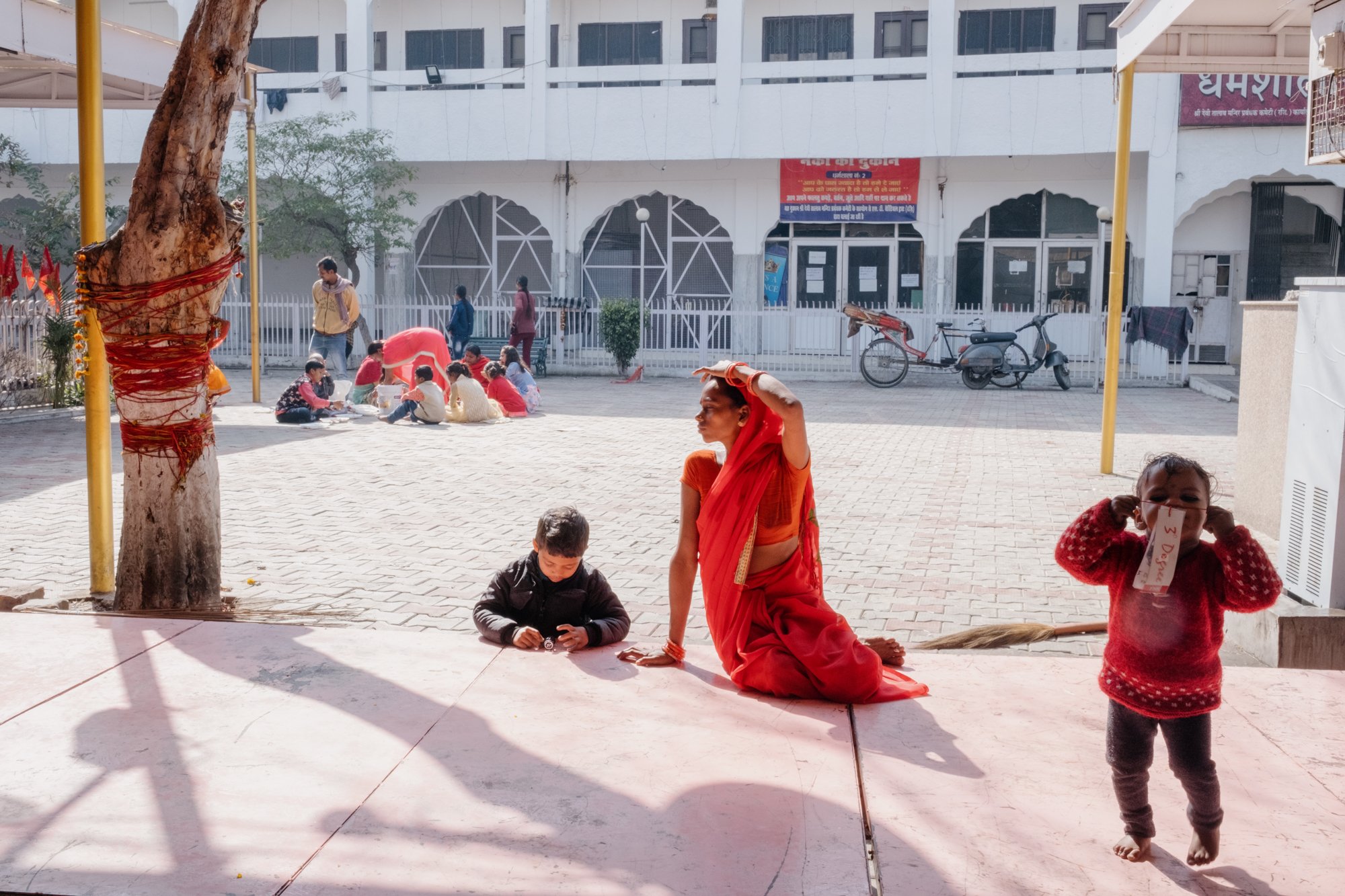
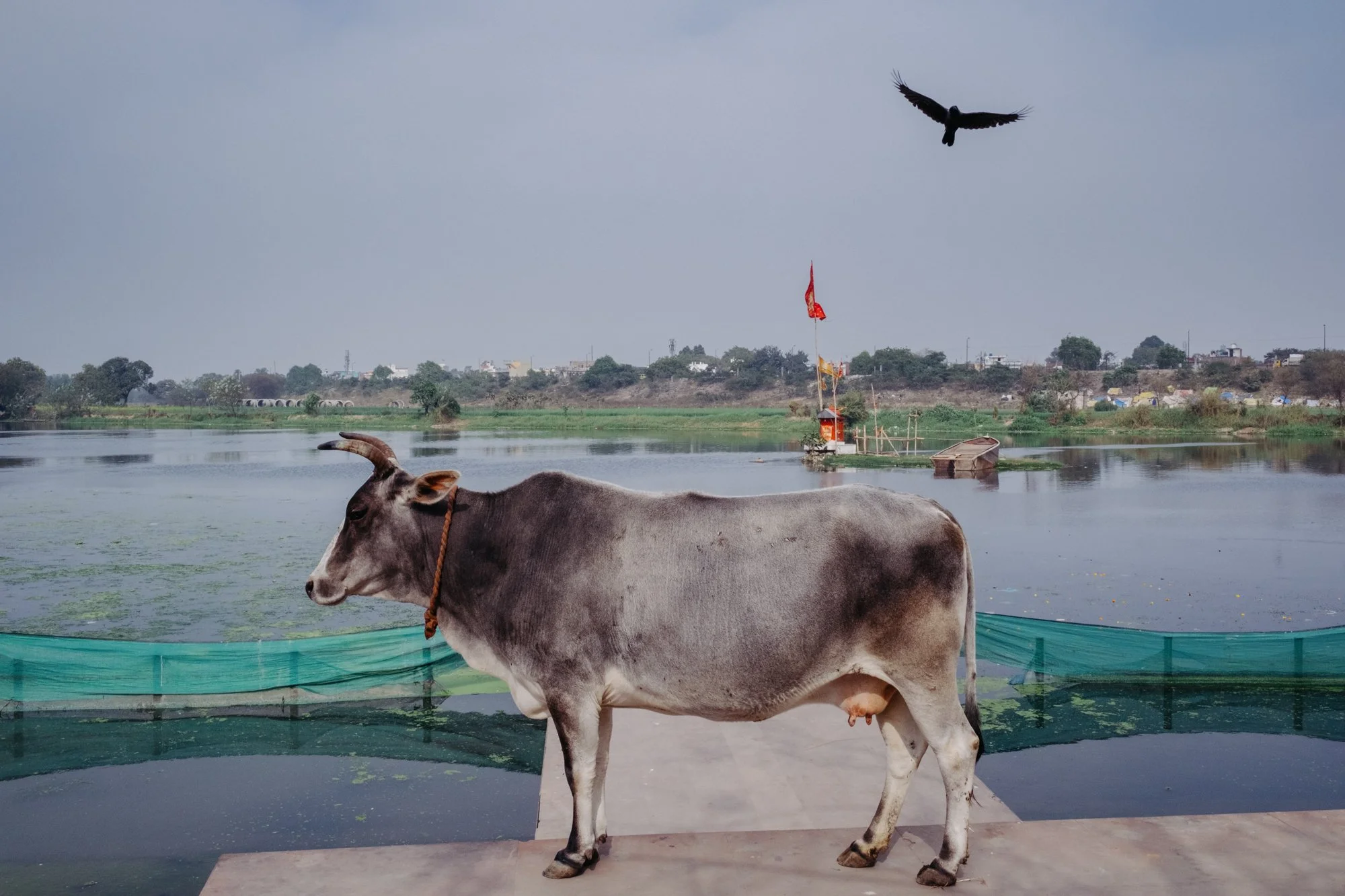
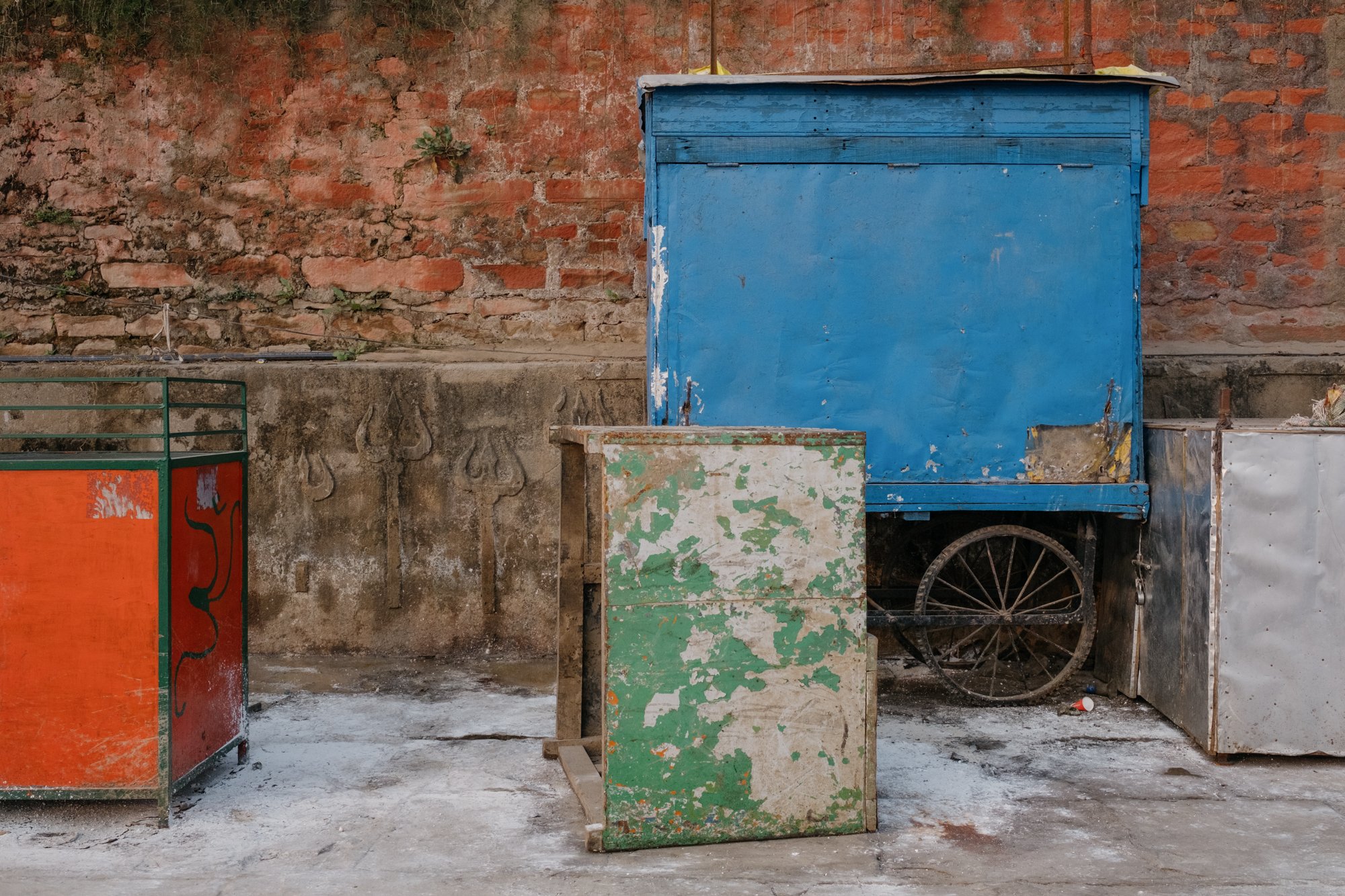
And that was it, more than 2 weeks of travelling and photographing one of the most amazing and diverse countries in the world. All in all, a fascinating if challenging experience. I found it very tricky to differentiate my photography from the millions of other pictures that photographers take there all the time. Let’s face it India for a photographer is like honey for a bear and it is very easy to fall for the cliché. I’m not saying I avoided the cliches but I also tried to focus on photographing a different kind of India, the negative spaces, the abandoned corners, the textures. I hope you like it.
A Note on Gear and Simplicity
I ended up shooting mostly on the Fujifilm X-H2S with my trusty Fujifilm XF23mm (35mm equivalent)—a focal length I’ve relied on for pretty much all my street photography over the years. It just feels natural at this point. Simple, dependable, and quick. No thinking, no fiddling—just seeing and reacting.
I did also bring the Fujifilm GFX50R with the Fujifilm GF 32–64mm, thinking I’d use it alongside everything else. But in reality, it was the complete opposite of how I like to work. Too big, too heavy, too slow. Instead of helping, it just got in the way. I carried it around a fair bit at the start, but gradually stopped reaching for it altogether.
I had a backup as well—the Fujifilm X100F—but that stayed in the bag the entire time.
And that’s when it really clicked. For this kind of travel—fast, unpredictable, street-focused—the less gear, the better. I’d rather move freely, stay light, and be ready for whatever happens than be bogged down by equipment I don’t actually need.
Maybe one day I’ll do a completely different kind of trip—something slower, more deliberate, maybe even shooting large format. But for street photography like this, simplicity isn’t just nice to have—it’s everything.